
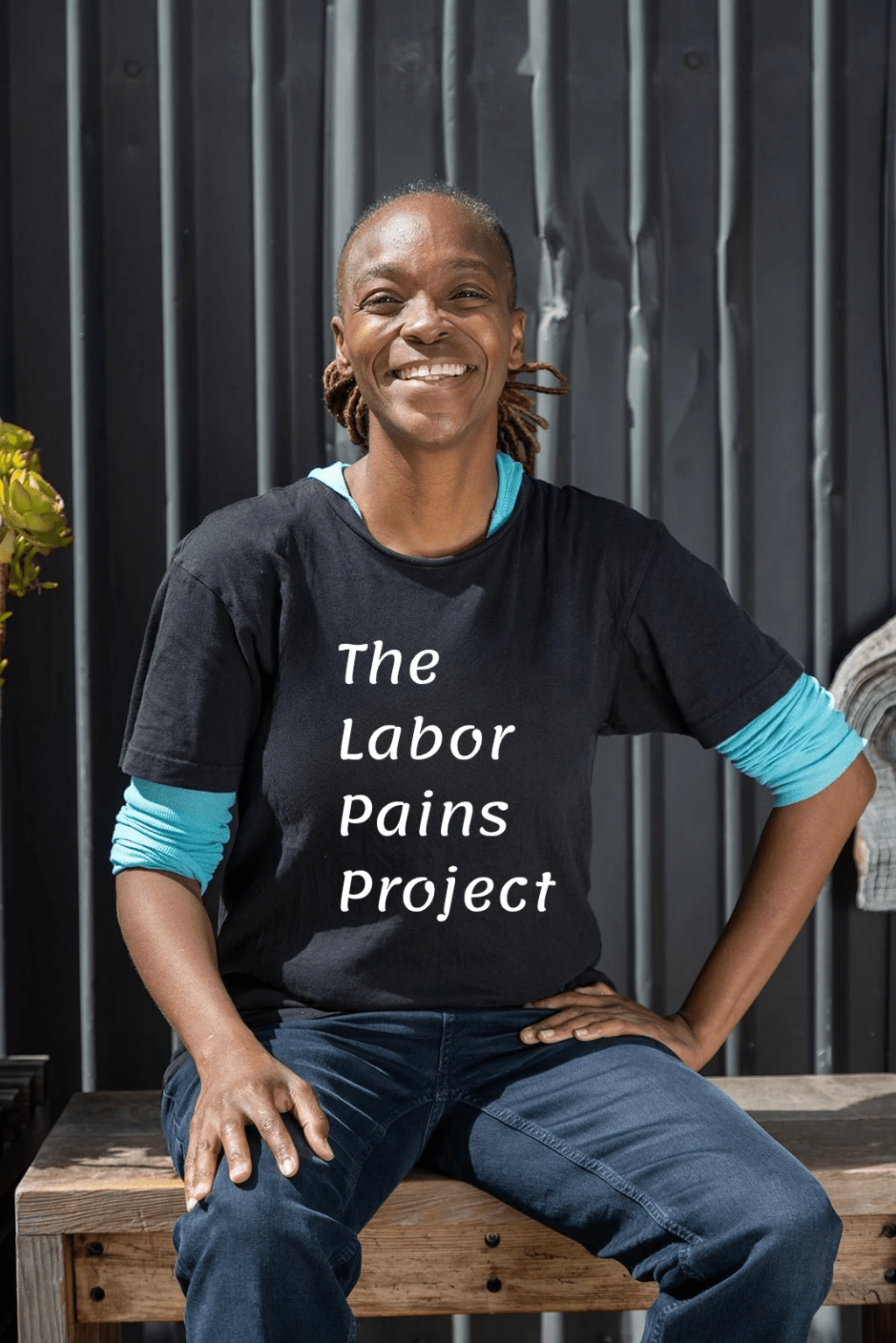
Some days in the archives are a quiet, methodical sifting through paper. Other days, the history rises off the page and grabs you. Today was one of those days. I’m deep into my research at the M.E. Grenander Special Collections at my alma mater, UAlbany, surrounded by speeches, old newspapers, meeting minutes, and handwritten notes. I came here with a plan, but as is so often the case, the archives had a plan of their own for me.
My focus has been the incredible Alice Green papers. I will be returning to her collection over the coming months, not just to understand her invaluable activism and advocacy in Albany, but also to trace her personal journey through the Great Migration and see how that experience forged her perspective. My original goal was to use Albany as a historical anchor for the Revolutionary era, given its deep ties to early American history and the long shadow of colonialism. But the history of the 20th century here is too raw, too immediate, and too loud to be just an anchor. It’s the whole story.
A Past That Isn’t Past
You can feel the raw nerve of racial prejudice in these documents, and you see how it flares up during moments of high national tension. It feels unnervingly familiar. As I sit here, our community is reeling from the Albany PD’s investigation into the lynching of 58-year-old Earl D. Smith this summer. There is a profound and justified distrust between the Black community and the APD in this city—a distrust with deep, documented roots. In her papers, Dr. Green references that the Albany branch of the NAACP was established back in 1935, partly as a direct response to the police department’s treatment of the Black community. History isn’t repeating itself; it’s simply continuing.

“Using Racism to Intimidate Whites”
Following that thread naturally led me to the NAACP records held in the collection, which span from 1965 to 1988. What I found there was staggering.
Flipping through newspapers from the late 1980s, I saw the narrative forming in black and white. Editorials and articles were full of the sentiment that Albany’s Black community “uses” accusations of racism to “intimidate whites.” In the very same breath, one publication defended running a political cartoon depicting former NYS Representative Arthur Eve as a Klansman, simply because he was advocating to continue the search for a Black city commissioner. The gaslighting is stunning. You see this public narrative, and then you dig into the official meeting minutes and private letters of the NAACP, and you see the other side: a constant, exhausting battle against attempts to thwart, undermine, and dismiss Black-led initiatives at the highest levels of city leadership.
The Myth of a “Disorganized” Community
I feel like I’m finally finding the answer to a question that has haunted me my entire life: why I always felt so out of place, so disconnected, in my own home of upstate New York. It wasn’t just me. Reading these memos, letters, and clippings, I feel a rush of validation, anger, and sorrow.
For generations, the Black community has been accused of being disorganized and inactive. But the archives don’t show a disorganized people; they show a relentlessly organized opposition. The truth is that the old white supremacist codes of Dutch colonial New York never went away. They just evolved. They became the most effective tools to justify the decentralization and undermining of Black initiatives, all in service of capital and keeping the industrial machine working for the benefit of a select few.
The NAACP and the Prince Hall Masons
This next part is personal. My father is a Prince Hall Mason, as was my grandfather and my great-grandfather. It is a very old, long-standing fraternal organization within the Black community, and its members elicit respect wherever they go. Some of my formative memories are of my grandparents driving me to the national conventions in New Orleans. It was there, when I was 14 years old, that I first heard the spiritual ‘Po’ Mona’s Got a Home At Las’,’ a song that remains in my repertoire to this day.
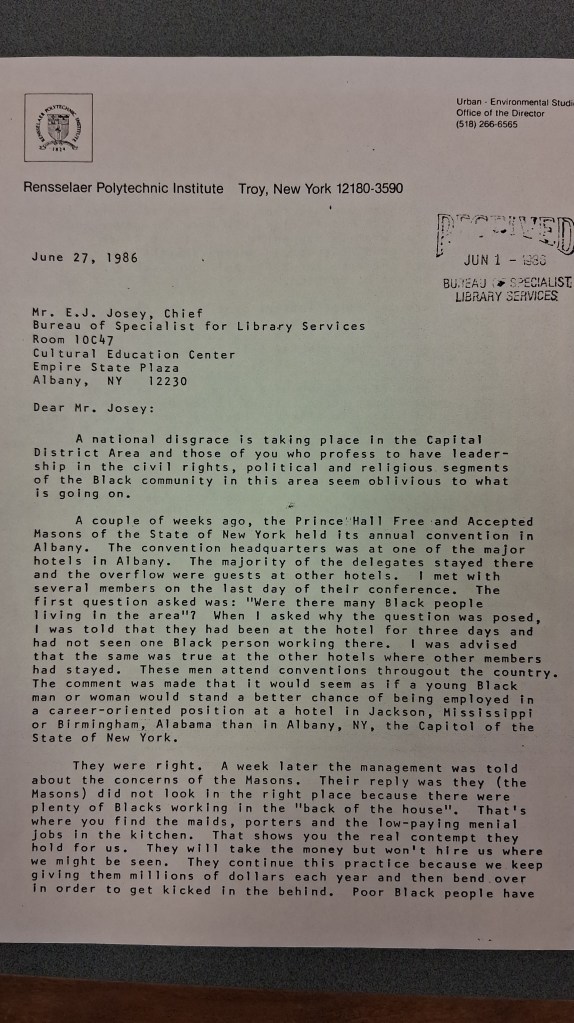
So, when I came across a 1986 letter from a Mason to the president of the Albany NAACP, it hit me hard. He criticized the organization for denouncing apartheid in South Africa while ignoring the discrimination in Albany’s own hospitality industry. Downtown hotels, he wrote, were more than happy to host the Prince Hall convention and take their tourist revenue. Yet, when the Masons looked around, they saw no Black faces among the front-of-house staff. When they asked hotel management where the Black employees were, they were told, “They are in the back.”
Reading about the disrespect this esteemed group of men felt at the hands of Albany’s business leaders disgusts me. It also makes me think of this year’s Essence Festival, and the similar disconnect where local New Orleans businesses and Black American vendors felt shut out of the very event meant to celebrate them. It’s the same story, decades apart: a desire for our dollars but not our presence.
Nesting in Place
Leaving the archives today, I feel emotionally spent but also strangely grounded. The feelings of alienation I have carried with me for so long now have a historical context. It wasn’t me; it was this place. The rustle of old paper has given voice to a story of quiet resilience and overt resistance that explains so much. Like Zora Neal Hurston, I had to leave, travel and live thousands of miles away, before I could put words to what I felt growing up in this corner of the country. My work here is just beginning. There are more boxes to open, more stories to uncover, and a much deeper history to tell.
Thank you for coming on this journey with me. This research is more than a project; it’s a mission to bring these essential stories to light. If this story resonated with you, please consider supporting the continuation of this archival work and the community workshops that will share these findings. You can contribute at this GoFundMe link. Any support helps me spend more time in the archives and bring this vital history back to the community where it belongs.

Leave a comment